


June 30, 2025 – New York, USA.
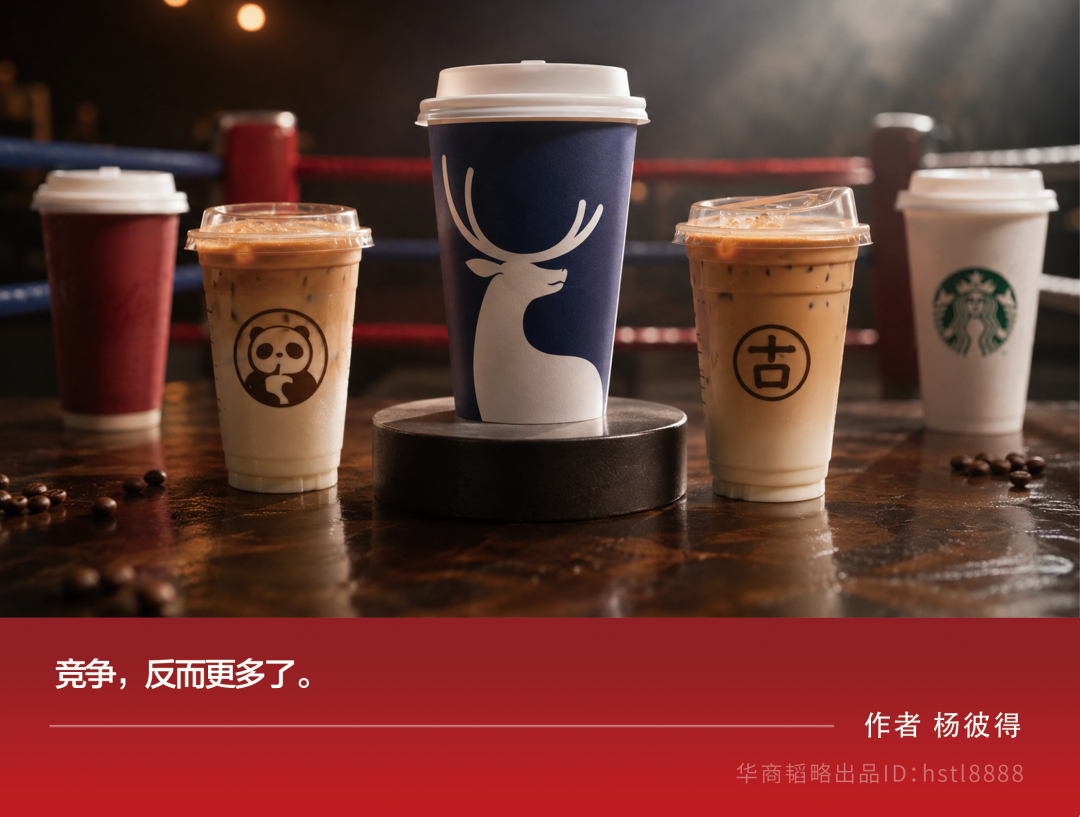
Luckin Coffee opened two stores in Manhattan on the same day, located on Sixth Avenue and Broadway. Symbolically, the Sixth Avenue store is less than 100 metres from a Starbucks.
It was Luckin’s first entry into the United States. Just one year later, it had grown to 20 stores across the country.
Even more striking is its overall expansion pace. According to Luckin’s latest financial report, in the second quarter of 2026, its total net revenue reached RMB 15.886 billion, up 28.5% year‑on‑year. Its global store count climbed to 36,310, with a net increase of 2,714 stores in just one quarter.
In 2023, Luckin overtook Starbucks in total sales in the Chinese market for the first time, becoming the country’s No.1 coffee chain. At that time, Cotti Coffee was chasing hard, Lucky Cup was accelerating its openings, and Starbucks was plotting a counter‑attack.
But three years on, the entire landscape has changed.

This summer should have been one of the best seasons for coffee sales. Yet Li Qing posted a store‑transfer notice on social media:
The account, equipment, plus a RMB 50,000 deposit – a total of RMB 140,000.
Li Qing is a franchisee of Cotti Coffee. According to his account to Tech Planet, when Cotti was expanding rapidly in 2023, he opened two stores in one go.
One underperformed and was taken back by the group after eight months. The other, a community store, cost him over RMB 400,000 in total and took two years just to break even.
But business was never really good. Today, that store’s daily turnover is only RMB 1,000 to 2,000. With high rent and limited foot traffic, Li Qing finally decided to transfer it out.
Another factor making some franchisees hesitant is a policy change.
Previously, Cotti had offered a “buyback guarantee” policy: if a store failed to meet expectations within 6 to 9 months of operation, the franchisee could apply to exit, and the headquarters would buy back equipment and assets at a discounted rate.
This policy expired on June 30, 2026. As a result, many franchisees rushed to transfer or close their stores before that date – Li Qing was just one of them.
Data from Hongcan (a Chinese restaurant‑data platform) shows that between March and May 2026, Cotti opened about 762 new stores, while simultaneously closing over 700.
This is a far cry from the Cotti of just a few years ago. Founded in 2022, Cotti kept its foot on the accelerator almost from day one – low prices, franchise‑friendly models, rapid store openings – and reached 10,000 stores within two years.
At its peak, it was considered the most likely contender to catch up with Luckin.
Now, Cotti is slowing down. Since March this year, it has suspended franchise applications in provincial capitals and above, and plans to set up a number of company‑owned model stores, officially stating that this is “to better enhance customer experience.”
Cotti is not alone in hitting the brakes.
Backed by the Mixue Group, Lucky Cup has been on a different trajectory over the past few years.
While Luckin and Cotti fought over office buildings, shopping malls and urban cores, Lucky Cup went into third‑ and fourth‑tier cities and even county towns. With cups priced at RMB 6 or 8, and leveraging Mixue’s mature supply chain and franchise system, Lucky Cup quickly expanded in lower‑tier markets.
In 2025, it officially surpassed 10,000 stores. But entering 2026, its pace has also slowed.
In July 2026, Lucky Cup explicitly stated that it would keep net new store additions for the full year within 2,000, with the second half capped at 1,000, while concentrating resources on about 20 core prefecture‑level cities nationwide.
Starbucks China has also abandoned speed.
In November 2025, Starbucks announced a joint venture with Boyu Capital; the deal closed in April 2026. Boyu holds 60%, Starbucks retains 40%, and approximately 8,000 stores in China are now operated by the new joint venture. Both parties have stated a long‑term goal of expanding to 20,000 stores in China.
But behind that long‑term target, Starbucks has shifted its focus to recalibrating its growth model.
At this point, all of Luckin’s main competitors – Cotti, Lucky Cup and Starbucks – have entered a phase of adjustment in 2026: Cotti tightening its franchise policy, Lucky Cup controlling new openings, and Starbucks restructuring its China business.
Three years ago, they were all trying to catch up with Luckin. Three years later, their rhythms have changed – while Luckin keeps charging ahead.

Where does Luckin’s momentum come from?
Part of the answer could be found on a train earlier this year.
In January 2026, a coffee‑bean special train, branded “Luckin Express,” departed from Ning’er Freight Station in Yunnan. Its 22 carriages carried 682 tonnes of the season’s Yunnan green coffee beans, destined for Xiamen, over 2,000 kilometres away.
This was the first dedicated rail service for coffee beans directly from Yunnan to Xiamen. In the past, road transport took about seven days; rail now cuts that time by about half.
At first glance, it is just a train – but behind it lies the first answer to Luckin’s accelerating growth: its supply chain.
After arriving in Xiamen, the beans are sent to Luckin’s roasting plants in Pingnan and other locations for further processing, before reaching stores across the country.
In just one crop season this year, Luckin purchased over 30,000 tonnes of coffee beans from Yunnan alone.
As coffee procurement grows, Luckin is also building more factories.
In April 2026, Luckin’s Qingdao Innovation Production Centre – an investment of about RMB 3 billion – officially went into operation, with an annual roasting capacity exceeding 55,000 tonnes. The plant houses the world’s largest single‑unit coffee roaster and integrates green‑bean storage, roasting, packaging and finished‑product output all within one base.

(Image source: Sina Finance)
At the commissioning ceremony, Luckin CEO Guo Jinyi noted that Qingdao’s advantages in port logistics, bonded processing and intermodal transport provide strong support for Luckin’s strategy of “front‑port, back‑plant, bonded processing, and global reach.”
With this, Luckin now has a four‑site roasting network spanning Qingdao, Pingnan, Kunshan and Xiamen (under construction), with planned total roasting capacity exceeding 155,000 tonnes.
From Yunnan’s growing regions to dedicated rail lines to roasting bases, Luckin has built a truly integrated supply‑chain network – from raw material sourcing to production and distribution. And it is beginning to exhibit a flywheel effect: the more stores it has, the more pronounced the network advantages become.
In February this year, Luckin’s 30,000th store opened in Shenzhen’s Longgang District, at the Xinghe WORLD industrial park. On opening day, a hand‑pour coffee made with 2025 Yunnan Baogui champion beans quickly sold out.
For a company with over 30,000 stores, once a new product gains traction, it can be rolled out nationwide almost overnight. A new store can plug directly into the existing procurement, warehousing, logistics and digital systems, so the marginal cost of adding a store is far lower than building one from scratch.
A latecomer that adds 1,000 stores often has to simultaneously expand warehouses, logistics and supply chain. Luckin, by contrast, just adds another node onto an already laid‑out network.
What’s more, this network is becoming increasingly digitalised, making the entire system more agile and efficient.
At the 2026 World Artificial Intelligence Conference, Luckin unveiled its full‑chain digital‑intelligence system for the first time.
Bean procurement volumes, warehouse allocation, logistics routing – all managed through data systems. New store locations are evaluated with the help of commercial, foot‑traffic and consumption data. At the store level, standardised equipment, systems and processes ensure consistent quality across tens of thousands of outlets.
On the consumer side, the data volume is even larger.
In the second quarter of this year, Luckin’s monthly transacting customers reached 113 million, up 22.9% year‑on‑year.
The massive daily order data also provides critical input for continuous product testing and new‑product development.
When a new product launches, data quickly shows which cities it sells best in, at what times, and whether customers repurchase. Winning products are then amplified through the tens of thousands of stores; underperformers are cut off faster.
This is the fundamental reason why Luckin has been able to consistently roll out hits like the Coconut Latte series and light milk teas over the years.
With this flywheel, Luckin is not only expanding rapidly, but also profitably. In Q2 2026, Luckin’s GAAP operating profit reached RMB 2.123 billion, up 22% year‑on‑year; operating margin at company‑owned stores still stood at 21.3%.
So, the picture is clear: Luckin’s advantage is not merely its 36,000 stores – stores are merely the outcome. The real differentiator is the system behind them, which has already started to run at scale.

In June this year, a ChaPanda (tea beverage chain) store that had only started selling coffee two weeks earlier moved its opening time forward to 7:30 a.m.
Previously, the peak hours for milk tea didn’t really start until after noon. Coffee changed that schedule.
According to the store manager, after adjusting the opening hours, daily coffee sales have been rising, “and it’s a good complement to the overall business.”
Similar changes are being replicated rapidly.
At the start of 2026, ChaPanda’s coffee business covered only about 200 stores. By June, that number had exceeded 2,700, surpassing its original annual target of 2,000 well ahead of schedule.
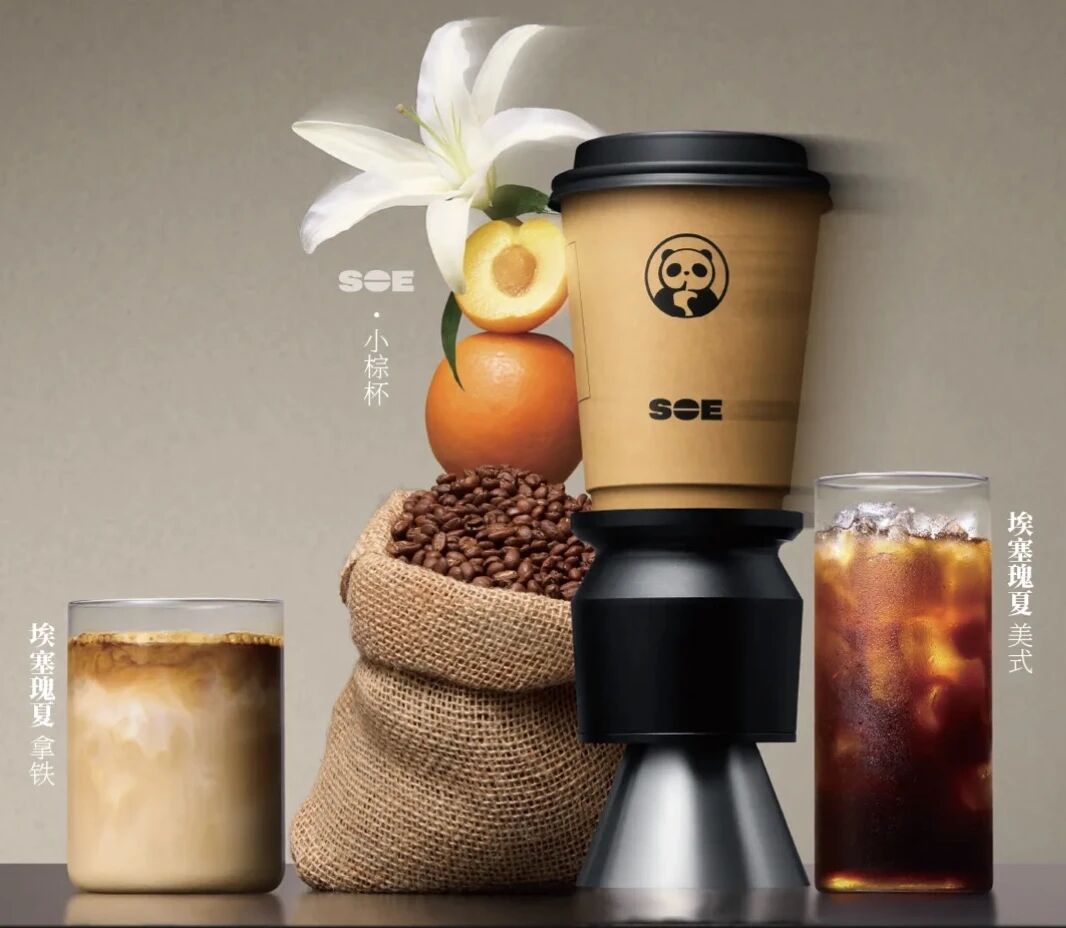
(Image source: ChaPanda)
Guming moved even earlier.
By the end of 2025, it had equipped over 12,000 stores with coffee machines and launched 27 new coffee products throughout the year. Tea shops that used to get busy only in the afternoon are now extending their business into breakfast and morning hours.
Lucky Cup took a different route.
Leveraging the Mixue Group’s supply chain and franchise network, Lucky Cup has already reached 10,000 stores. From milk, syrup and packaging materials to cold‑chain logistics and franchisee management, the infrastructure built during the bubble‑tea era can also be used to sell coffee.
This is the most notable aspect of tea‑brands entering the coffee space en masse.
For brands like Guming and ChaPanda, they don’t need to build a new company from scratch. The stores are already there, the consumers are already there, and the supply chain is already there. Adding coffee equipment gives them an opportunity to utilise the relatively quiet morning hours.
In the past, Luckin mainly kept an eye on coffee rivals like Starbucks and Cotti. Now, a new set of competitors – tea‑giants with tens of thousands of stores – are entering the same market.
But this crossover is two‑way. Tea brands are moving into coffee, while Luckin is also moving into tea.
In August 2024, Luckin launched “Qingqing Moli · Light Milk Tea,” advocating “coffee in the morning, tea in the afternoon.” By the end of May 2026, cumulative sales of its freshly made teas and other non‑coffee products exceeded RMB 20 billion.
Its list of bestsellers now features more and more non‑coffee items – light milk teas, lemon teas, fruit‑and‑vegetable teas, and so on.
Luckin’s strategy is clear: with over 30,000 stores already in place, it aims to keep them busy from morning till evening.
At this point, what Luckin and the tea chains are competing for is no longer just a cup of coffee, but every beverage occasion in a consumer’s day.
Simultaneously, Luckin is also pushing its boundaries in another direction.
In June 2025, it entered the United States for the first time, opening two stores in Manhattan, New York. By the end of Q2 2026, Luckin had 223 overseas stores, covering Singapore, the US and Malaysia.
Going global has also brought new challenges.
In China, consumers are used to ordering on their phones and picking up in store. One year after entering the US, Luckin began installing self‑order kiosks in its local stores to accommodate American consumers’ preference for in‑person ordering and offline payment.
This may look like just a few machines, but it is actually a broader test: can the supply‑chain, digitalisation and high‑density store model that worked in China also succeed in a different market with different consumer habits?
Three years ago, Luckin’s main rivals were a few coffee chains in China.
Now, tea brands are entering coffee, and Luckin is entering tea and overseas markets. The old boundaries have been broken.
In this new war, the opponents have changed, the battlefield has changed, and everyone is changing faster than before. Luckin itself will have to keep evolving. One might predict that the ultimate endgame for both coffee and tea will be a fusion of the two – and the future king will be the one with no borders in beverages.
Disclaimer: The copyright of this article belongs to the original author. Some articles on this platform are republished for sharing and discussion only; if there are any disputes or infringements, please contact us for removal.