


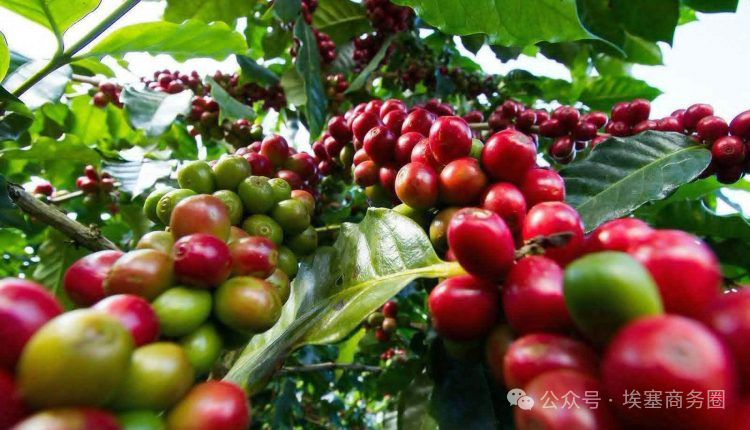
As the birthplace of coffee, Ethiopia is transforming this centuries-old global heritage into a major force driving economic transformation. With simultaneous increases in production, productivity, and exports, coffee has taken a central position in the country's rapidly changing agricultural sector. For Ethiopia, coffee is not only deeply embedded in its culture and social life but also remains a livelihood and employment source for millions, and a crucial pillar of national foreign exchange earnings. Today, this economic role is reaching a striking new scale. According to data from the Ethiopian Ministry of Agriculture, in the recently concluded fiscal year, the country's coffee export revenue exceeded 3.1 billion USD, accounting for the largest share of agricultural export revenue; during the same period, total agricultural export revenue exceeded 4.55 billion USD.
Looking at a longer timeframe, this achievement is even more remarkable: over the previous 17 years, coffee export revenue totaled approximately 3.3 billion USD, meaning the performance of the latest single fiscal year has nearly matched the cumulative revenue of the previous two decades. Behind these figures lies a vast economic network connecting producers, processors, traders, and exporters, with millions of people directly or indirectly relying on the coffee industry for income and employment.
The change is not just about how much coffee Ethiopia produces, but how it produces, markets, and positions it. Recent agricultural reforms have placed greater emphasis on improved coffee varieties, modern production methods, and technology to enhance productivity and expand output. This shift is driving the industry to gradually move beyond traditional advantages toward a more competitive, technology-supported production system capable of responding to growing international demand.
Market access is also evolving. The continuous expansion of direct market linkages allows producers to connect more closely with international markets, enhancing competitiveness and providing more opportunities to add value and increase income. For a country whose coffee has long traveled the world, this transformation increasingly means ensuring that more of the economic value created along this global journey remains within Ethiopia.
The environmental dimension is equally crucial. Ethiopia's coffee story is inseparable from its forests, particularly the forest coffee ecosystems. The "Green Legacy Initiative" contributes to protecting and expanding forest resources, supporting the ecological foundation upon which coffee production depends, and enhancing broader climate resilience. Against the backdrop of intensifying climate pressures, this intersection of agriculture, environment, and economic value is becoming increasingly important.
Sustaining industry growth requires not only increasing production, but also stricter quality assurance systems, higher value addition, and broader adoption of climate-resilient agricultural practices. Therefore, the significance of this transformation extends far beyond coffee itself. Ethiopia is leveraging its extraordinary natural and historical advantages—as the birthplace of coffee, possessing generations of accumulated knowledge surrounding the crop—while applying modern agricultural technology, improved production systems, closer market linkages, and environmental stewardship. This combination is changing what Ethiopian coffee means in the global economy.
For generations, the world has known Ethiopia through its coffee; today, it is increasingly a story of how Ethiopia is building its future from this heritage: stronger exports, higher productivity, broader rural livelihoods, enhanced competitiveness, and a more modern agricultural economy. Coffee remains a defining part of Ethiopia's heritage, but its latest rise demonstrates that the crop is becoming something more: a powerful measure of the nation's agricultural transformation, and one of the clearest ways Ethiopia is converting centuries of global heritage into contemporary economic strength.